When you decide to "make an app", there are three very different ways to do it. The choice changes the budget, the timeline and what your product can do, so it is worth understanding before you ask for quotes.
The three options in one sentence each
- Native app: two separate apps, one written for iPhone (Swift) and one for Android (Kotlin).
- Cross-platform (React Native): one codebase that produces real apps for both stores.
- PWA (progressive web app): a website that can be installed on the phone's home screen and behaves like an app.
Side by side
| Native | React Native | PWA | |
|---|---|---|---|
| Relative cost | Highest (two apps) | Medium (one codebase) | Lowest |
| Time to launch | Slowest | Fast | Fastest |
| App Store and Google Play | Yes | Yes | No (installed from the browser) |
| Performance | Best possible | Near native for most apps | Good, depends on the browser |
| Camera, GPS, offline | Full access | Full access | Partial, especially on iPhone |
| Push notifications | Yes | Yes | Limited on iPhone |
| One update for everyone | No | Mostly | Yes, instantly |
When native makes sense
Native is the right call when the app pushes the phone to its limits: heavy 3D, advanced video editing, augmented reality, or deep integration with very new hardware features. It is also common in large companies that already have separate iOS and Android teams.
For most startups and businesses, native means paying for the same product twice.
When React Native makes sense
For the vast majority of products we build, React Native is the sweet spot. You get real apps in both stores, access to the camera, GPS, notifications and offline storage, and one team writing one codebase. That usually means 30 to 40 percent less cost than going native.
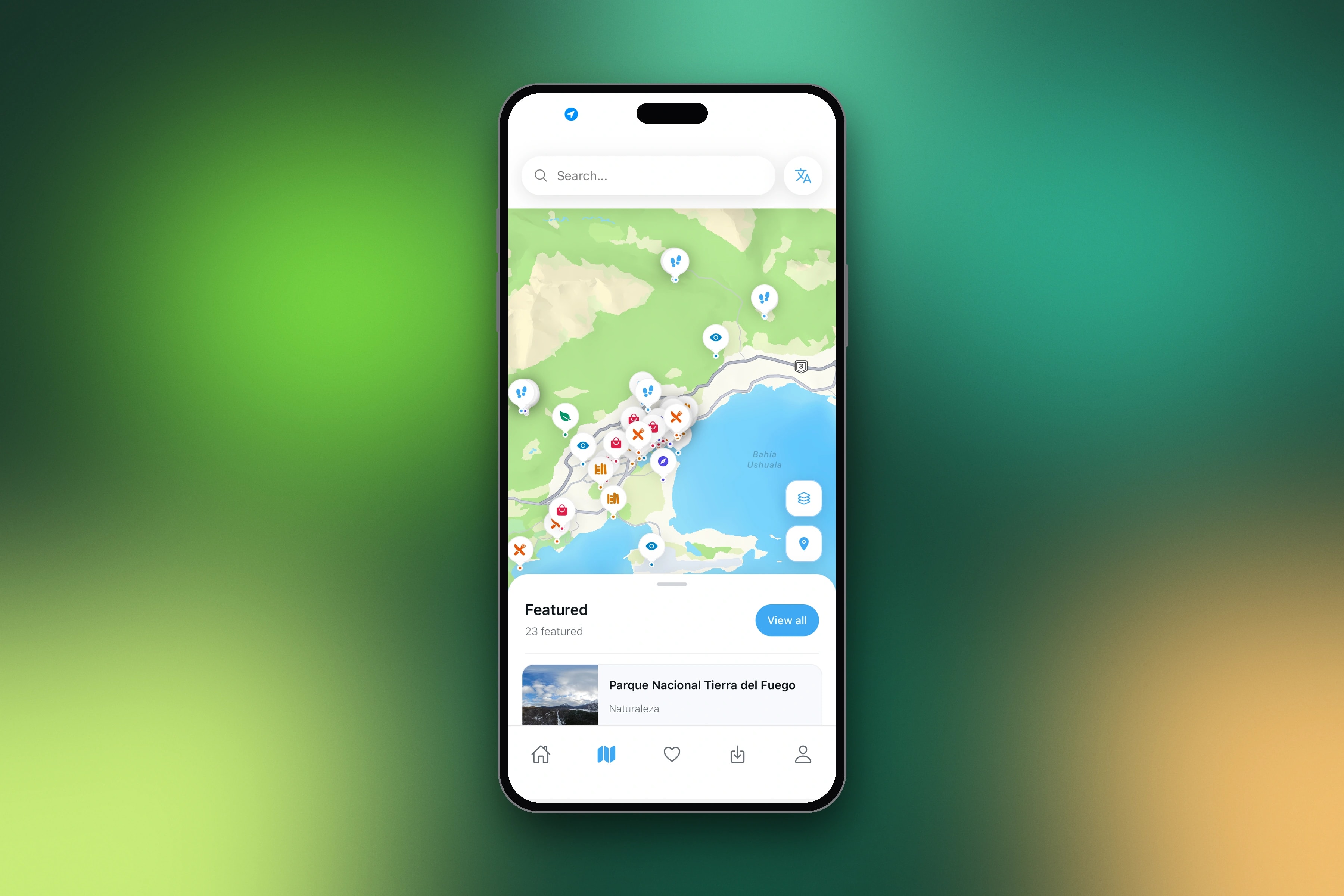
Ushuaia360 is a good example: a hiking app with GPS traces, 360° photos and full offline navigation, built with React Native and Expo, live on both the App Store and Google Play. If an app can work at the end of the world with no signal, the technology is not the bottleneck. The same goes for apps people open every week, like a sports field booking app, where notifications and a saved payment method make the difference.
When a PWA (or a plain web app) makes sense
A PWA is ideal when people will use the product occasionally and you do not want to force a download. Think ordering at a venue, booking a one-time service or checking a status.
In Nubapay, attendees at massive events scan a QR, order and pay from their phone browser without installing anything. At a festival with a line of people, "download our app first" is a lost sale. Choosing the web there was a product decision, not a budget one.
Questions to decide
- Will people use it every week? If yes, an app in the stores earns its place on the home screen. If not, the web is probably enough.
- Do you need push notifications on iPhone? If they are central to the business, go with React Native.
- Does it need to work without signal? Full offline points to React Native or native.
- How sure are you about the idea? If you are still validating, start on the web and move to apps when you know people come back.
Our recommendation
For a new product: web or PWA to validate, React Native to grow, native only if there is a specific technical reason. And whatever you choose, keep the backend separate from the app so you can add a new channel later without rebuilding everything.
If you are not sure which one fits your case, we can help you decide. It is usually a 30-minute conversation. You can also check how much an app costs with each approach.
Frequently asked questions
Is React Native as good as native?
For most business apps, users cannot tell the difference. Native still wins for very demanding graphics, advanced video or brand-new hardware features.
Can a PWA be published on the App Store?
Not directly. A PWA is installed from the browser. Google Play accepts PWAs packaged in a wrapper, but Apple's App Store requires a real app, which is where React Native comes in.
Can I start with a PWA and move to an app later?
Yes, and it is a common path. If the backend is built as a separate API, the same business logic can serve the web and a future React Native app.