"How much does an app cost?" is the first question almost every founder asks us, and the honest answer is: it depends on your app. Not as a way of avoiding the question, but because two apps that look identical on the surface can be completely different projects once you look at what happens behind each button.
That is why we do not work with price lists or packages. Every product we build is designed around a specific business, specific users and a specific goal, and the budget is built the same way. This guide explains what defines that number, so you can understand any quote you receive, ours or anyone else's.
Why there is no "standard price"
An app is not a product off a shelf. It is a set of decisions: who uses it, what they can do, what happens with their data and their money, what other systems it talks to. Change one of those decisions and the work changes with it.
A price list forces your idea into a template. A personalized quote starts from your idea and sizes the work around it. The first looks simpler; the second is the one that reflects what you will actually pay.
The six factors that define the budget
1. Number of user roles
An app with one type of user is one product. An app with buyers, sellers and an admin is really three products sharing a database. Every role multiplies screens, permissions and testing. It is usually the factor that weighs the most.
2. Payments and money flows
Charging a card once is simple. Holding money between two parties, splitting payments, refunds, payouts and invoicing are not. In Latin America, integrating Mercado Pago is standard work, but flows with protected payments between strangers, like the ones in Nuddo, need careful design.
3. Integrations with other systems
Maps, shipping carriers, CRMs, ERPs, accounting software or legacy databases. Each integration depends on a third party you do not control, with its own documentation, limits and surprises.
4. Offline, real time and other hard requirements
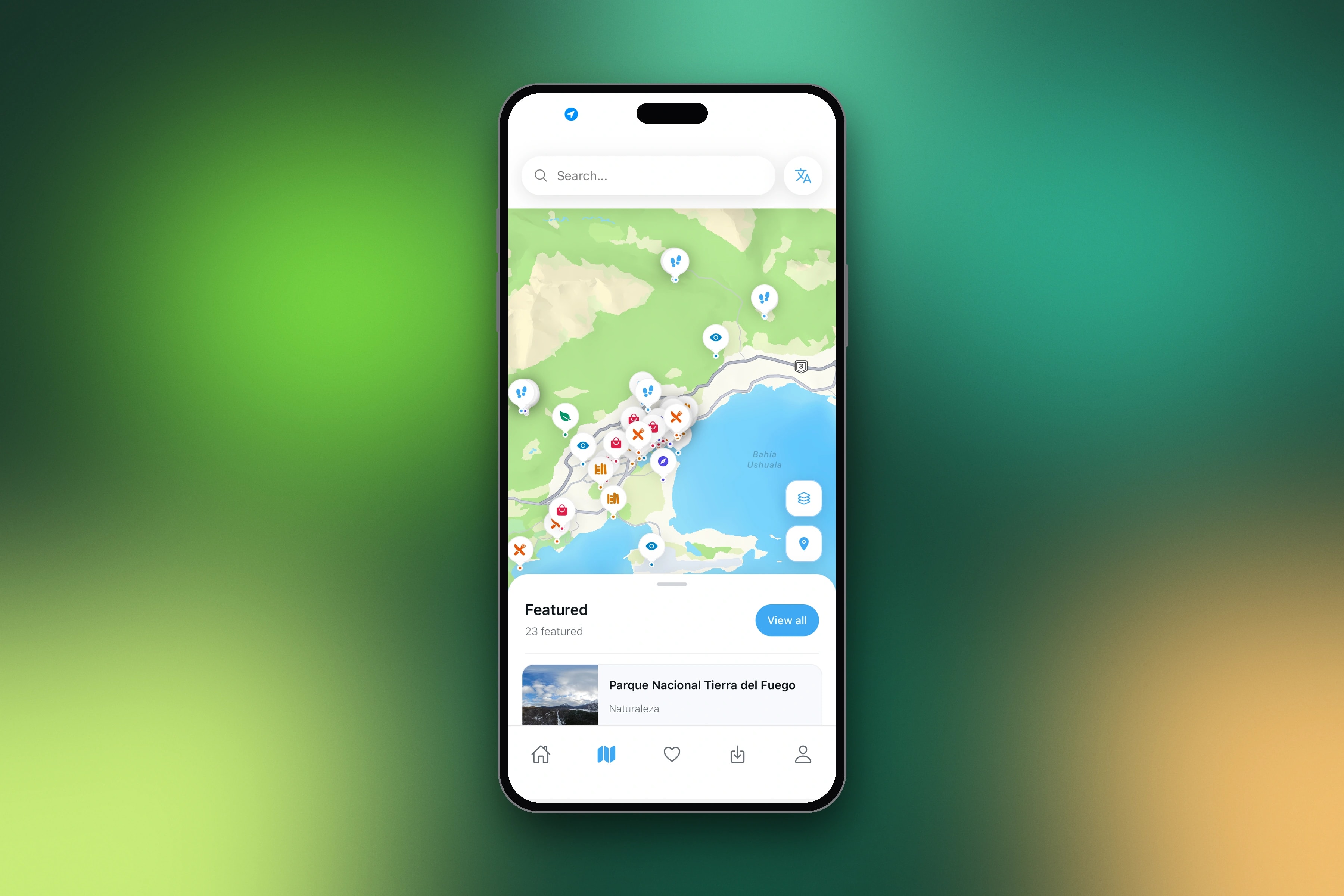
Real-time chat, live tracking or full offline mode change the architecture. In Ushuaia360 the whole product had to work with no signal at the end of the world, and that shaped every technical decision. We explain how in our guide to apps that work offline.
5. Design depth
A clean interface built on a solid design system is one thing; custom illustrations, complex animations and a brand built from scratch are another. Good design is not decoration: it is what makes people come back.
6. The admin panel nobody budgets for
Every app needs a back office: someone has to approve users, edit content, check orders and answer support. It is often a large part of the total work, and the most common surprise in quotes that look cheap.
What else to plan for
Beyond building the product, an app has running costs that depend on how it is built and how many people use it:
- Hosting and services: servers, database, email, maps and storage.
- App Store and Google Play: Apple charges an annual developer fee and Google a one-time registration fee.
- Maintenance: operating systems update every year and libraries age. An app needs ongoing care to keep working well.
- Content and data: someone has to load products, photos and texts.
A good quote should tell you which of these are included and which are not.
How to invest well without building the wrong thing
The best investment is an app that only has what the first users need. Start with an MVP: one core flow, done well, for one type of user. Cut the features you "will probably need" and wait for real users to ask for them.
Technical decisions also matter. Choosing React Native over two native apps means one codebase for iOS and Android instead of two. And if the idea is still unproven, a validation prototype answers the most important question before you commit to the full build.
How we build a quote
Our quotes start with a conversation, not a form. We want to understand the business, the users and what success looks like. From there:
- We define the core flow and the roles together.
- We separate what goes in the first version from what can wait.
- We identify integrations, payments and technical risks.
- We send a closed scope with what is included, the timeline and the investment.
That way the number you receive reflects your product, not an average of other people's.
How to compare quotes
Whoever you talk to, ask every studio the same questions:
- Does the price include design, or only development?
- Is the admin panel included?
- Who owns the code and the accounts when we finish?
- What happens after launch: bugs, updates, support?
- How do changes in scope get priced?
A quote that is a single number with no breakdown is not cheaper, it is undefined. We wrote a whole guide on how to choose a development agency if you are comparing options.
The short answer
The cost of an app depends on how many types of users it has, how money moves through it, what it connects to and how far the first version needs to go. Because every product is different, every budget is too.
If you want to know what your idea would take, tell us what you are building and we will send you a first reading of scope, timing and investment, built around your project.
Frequently asked questions
Why don't you publish prices?
Because every project is different. The number of user roles, payments, integrations and the scope of the first version change the work completely, so we prefer to quote each product based on what it actually needs.
Is it cheaper to build for iOS or Android first?
With React Native you build both at once from a single codebase, which is usually more efficient than building one native app and then the other. Launching on only one store can be a way to test, but the development work is very similar.
What does maintaining an app involve?
Updates for new operating system versions, library upgrades, bug fixes, monitoring, plus hosting and third-party services. How much it takes depends on the app and how many people use it.
Why do quotes for the same app vary so much?
Because each studio imagines a different scope. One includes design, an admin panel and post-launch support; another quotes only the screens you described. Compare what is included, not just the total.