A marketplace looks simple from the outside: people list things, other people buy them. Underneath, it is at least two products (one for each side), a payment system that holds money between strangers, and an operations layer that keeps the whole thing honest. That is why marketplaces cost more than a regular app, and why cheap quotes for them are almost always incomplete.
Why there is no price list
No two marketplaces work the same way. Selling second-hand clothes, renting equipment, booking services or ordering at an event are all "marketplaces", and they share almost nothing in how money, trust and logistics move. That is why we quote every marketplace from its own model, not from a table.
What we can tell you is how the work is usually organized:
| Stage | What it includes |
|---|---|
| Concierge or no-code test | Manual matching, forms, existing tools |
| Marketplace MVP | Listings, search, checkout, basic reputation, admin |
| Full marketplace | Web + iOS + Android, payouts, shipping, disputes, analytics |
Where your project lands, and how big each stage is, depends on the factors below.
What defines the budget
Two onboarding flows
Buyers and sellers need different sign-ups, different profiles and different dashboards. Sellers usually need verification, a way to manage their listings and a view of their sales. That alone can double the number of screens.
Listings and search
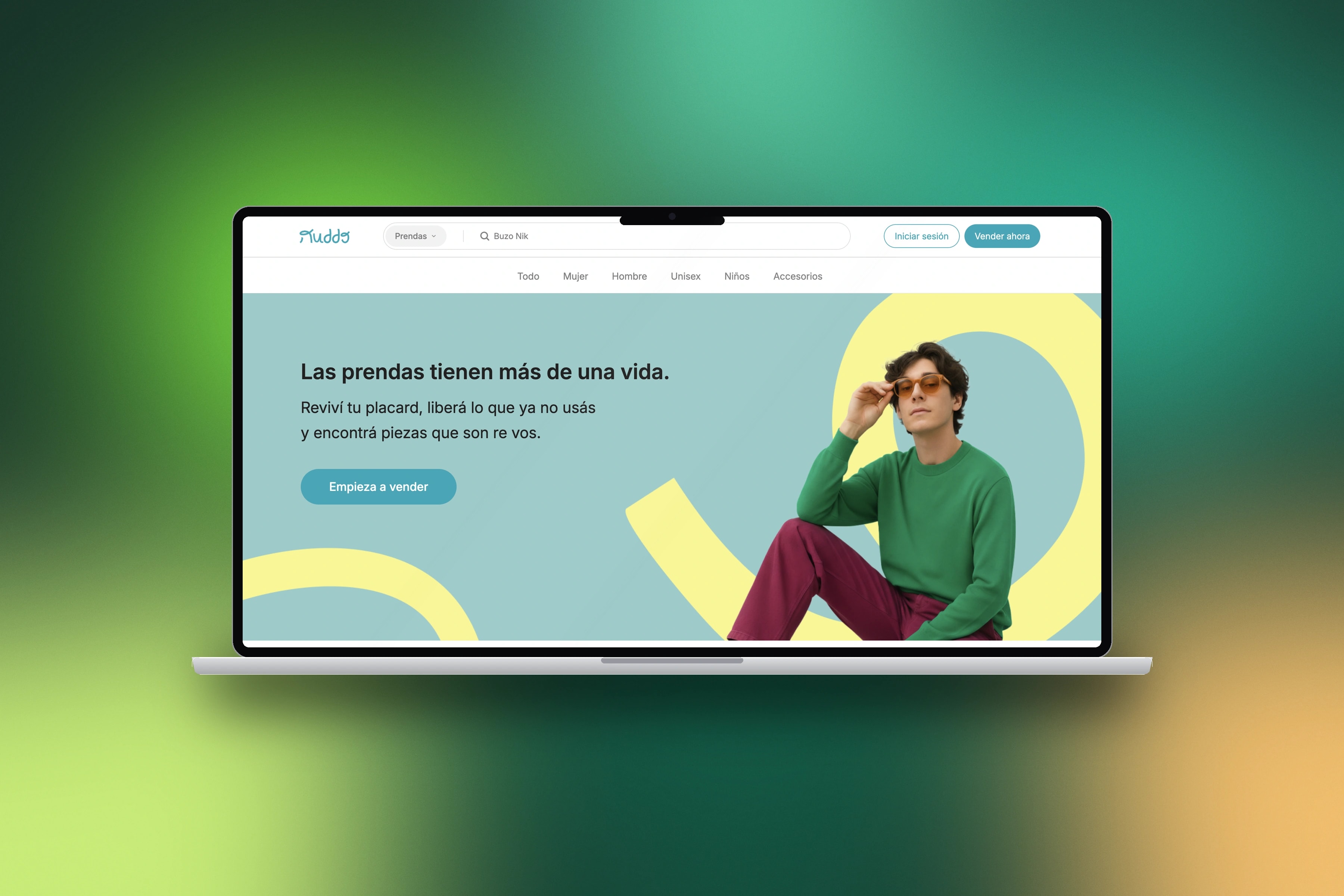
Publishing has to be fast or supply never shows up. In Nuddo, a second-hand fashion marketplace, we designed listing so it takes a few steps, because if uploading a garment feels like a project, nobody does it. Search needs filters that match how people actually decide: size, price, condition, location.
Payments between strangers
This is the hardest part. A marketplace usually needs to charge the buyer, hold the money, take a commission and pay the seller once the deal is done. In Latin America that typically means Mercado Pago with split payments or a provider like Stripe Connect where it is available. Refunds, disputes and taxes all live here.
Trust and reputation
Reviews, ratings, verified profiles and a visible transaction history. Strangers do not trade without a reason to trust each other, and the reputation system is that reason.
Logistics
If physical goods move, someone has to arrange the handoff. Integrating a shipping provider so the delivery is booked as part of the purchase removes the moment where most deals die.
The admin panel
Moderating listings, resolving disputes, issuing refunds, checking payouts, banning bad actors. Marketplaces need more back office than almost any other product.
Build from scratch or use a white-label platform?
White-label marketplace platforms (Sharetribe, CS-Cart and similar) let you launch in weeks for a monthly fee. They make sense when your marketplace looks like the standard model: listings, checkout, commission.
Build custom when:
- Your transaction is not a standard purchase (bookings, auctions, services, events, rentals).
- You need local payment methods or logistics the platform does not support.
- The marketplace itself is your competitive advantage, not just the channel.
In Nubapay, for example, the flow is ordering and paying at massive events, with pickup validated by a unique QR. No template covers that.
How to make the first version a smart investment
- Pick one side to subsidize. Most marketplaces start by building the best possible experience for supply and a simple one for demand.
- Do things manually first. Approvals, disputes and even matching can be handled by a person with an admin panel before you automate them.
- Launch in one niche and one city. Narrow liquidity beats broad emptiness. We cover this in detail in the chicken-and-egg problem.
- Web before apps. A responsive web marketplace validates demand at a lower cost; the apps come once people are coming back.
The short answer
The cost of a marketplace depends on how the transaction works, how money moves between the sides, how much trust and logistics the platform has to provide, and how far the first version needs to go. Because every marketplace is its own model, every budget is personalized.
Before investing, make sure you know what your MVP really needs. And if you want to know what your marketplace would take, tell us about it and we will send you a first reading of scope, timing and investment.
Frequently asked questions
Can I build a marketplace without coding?
Yes, to test the idea. Tools like Sharetribe or even forms and spreadsheets let you validate demand in weeks. Most successful marketplaces move to custom software once the transaction model and volume justify it.
How do marketplaces handle payments in Argentina?
The most common option is Mercado Pago with split payments, which lets the platform keep a commission and send the rest to the seller. The exact setup depends on the business model and tax situation.
How long does it take to build a marketplace?
An MVP with payments and an admin panel takes three to five months. A full product on web, iOS and Android usually takes five to nine.